
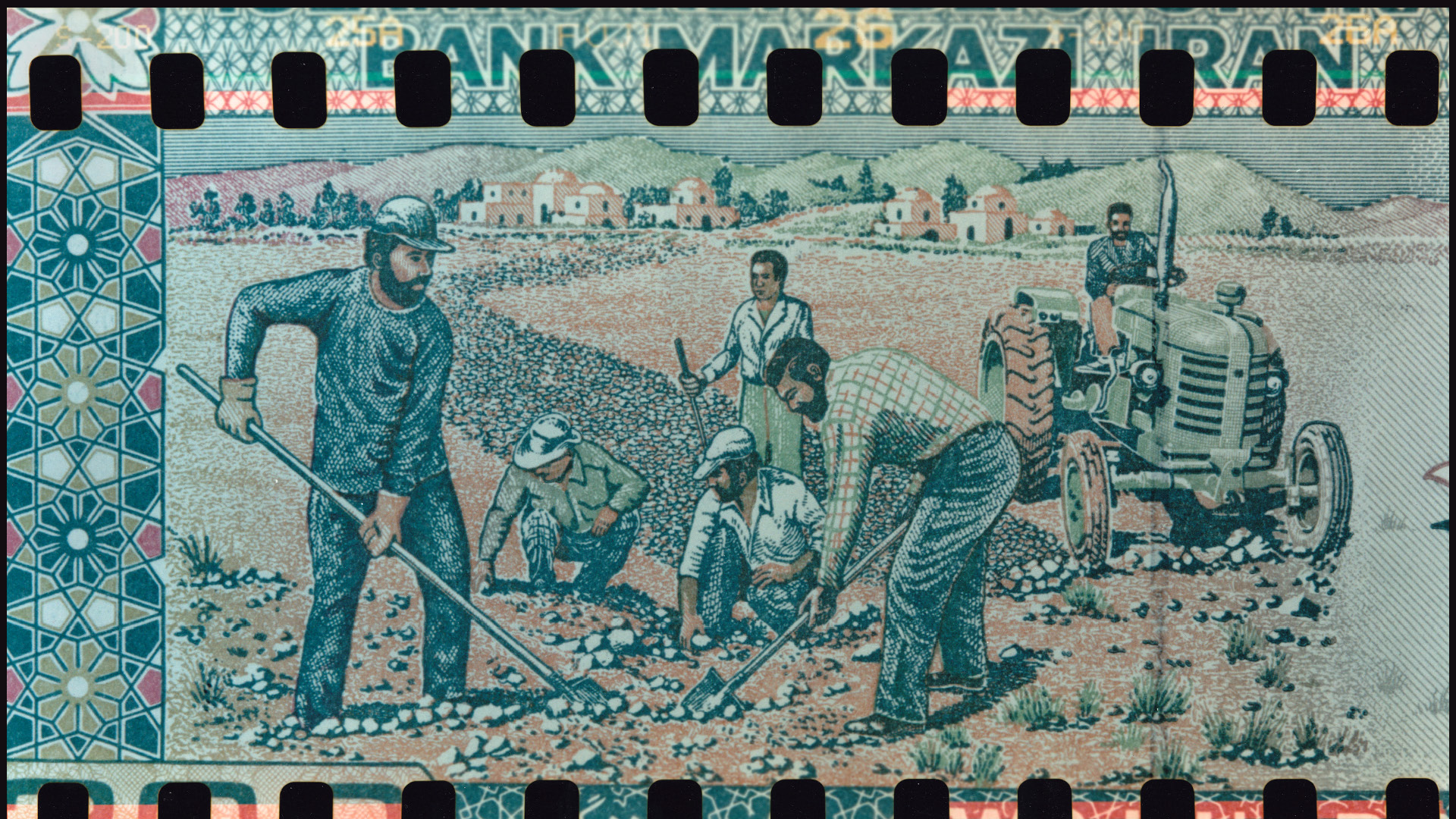
Every Worker Should Have Equal Labour Rights
Group exhibition curated by Nima Esmailpour
Presented in collaboration with:
Charles Street Video

Thanks to CSV for supporting this exhibition/performance through their Maker Space program.
On View:
May 1–30, 2026
Featuring five artists—Dana Prieto & Safaa Alnabelseya, Deja Hosein, Euridice Zaituna Kala, and Randa Maroufi—Nima Esmailpour brings together four distinct projects presented at different venues during the festival:
And For You, Flours and Flowers
Know Problem
Rendition
L’Mina
Each artist, working across different media, critically engages with the lived experiences of working people, drawing connections across histories of labour injustice and worker-led resistance in the Global South.
Opening Reception:
Saturday May 2, 6:00–9:00pm at Charles Street Video
Dana Prieto is a site-responsive artist, educator, and researcher based in Tkaronto. Her practice examines personal and collective relations with colonial infrastructures through a careful attention to the ground, and the different forms of living and dying within it. She holds a Master of Visual Studies from University of Toronto, and her work has been presented in national and international galleries, public spaces, and informal cultural venues. Dana is a co-founder and facilitator at SHEEEPschool, a research associate for Finding Flowers project, and the coordinator of the podcast "Sounds Like Land." This summer she will be co-presenting “Feeding Educators” with Safaa Anabelseya, an experiential, food-based art project at Evergreen Brick Works.
Deja Hosein (Saint Lucian-born, Hamilton-based) is an emerging photographer developing her analogue practice and recently exhibited at Gallery 44. Focusing on the use of the camera, portraiture, and racialized representation, she is working on a series that explores how mixed-race identities—specifically of African and Indian descent—are portrayed through the lens of her own lived experience.
Euridice Zaituna Kala Born in 1987 in Maputo, Mozambique, Euridice Zaituna Kala lives and works in Maisons-Alfort. Her work focuses on cultural and historical metamorphoses, their manipulations and their ad- aptations. The artist reproduces the visual vocabulary of historical archives in order to reveal not only their subjectivity, but also those they have invisibilized. She questions the appropriation of black bodies through their representation in archives; but rather than seizing their history, she attempts to reaffirm their existence. Her approach is based on research, with a multi-form expression. Her practice is protean: performances, installations, photographs, texts, videos, sculptures/landscapes, sound pieces. A graduate in experimental photography from the Market Photo Workshop in Johannesburg (South Africa) in 2012 and from the Asiko School in Maputo (Mozambique) in 2015, currently enrolled in a Masters of Arts programme at the École national supérieure d’arts Paris-Cergy (2026). Euridice Zaituna Kala is the first laureate of the Prix Carta Bianca (2025-2026), a finalist for Paulo Cunha e Silva prize (2023). She was also the recipient of the Villa Vassilieff/ADAGP scholarship (2019/2020) and did a residency at the Villa Albertine in New York (2022/2023) and at the Villa Medici in Roma (2023). Zaituna Kala has presented a solo exhibitions such as Daylighting: mais c’est l’eau qui parle, La Criée Rennes (2025), La Loge, Brussels (2026), Kunsthalle, Münster, (2026), En quelques gestes: as if two suns were setting, Galerie Anne Barrault, Paris (2025), Sea(E)scape: Dna (Don’t (N)ever Ask), Salon H, Paris , (2022), and Je suis l’archive, I the archive at Villa Vassilieff in Paris (2020). She also participates in many group shows, such Le Syndrome de Bonnard, Frac Ile-de-France, Paris & Romainville, (2026) The Great Camouflage, Rockbund Art Mu- seum, Shanghaï, China (2025-2026) Primavera, Primavera, Frac MÉCA, Bordeaux (2024), Echos der Bruderländer at the HKW in Berlin and Passengers in Transit in the frame of the Ven- ice Biennale, Prémio Paulo Cunha e Silva, at Porto Municipal gallery (2023), Indigo Waves and Other Stories at Berlin Savvy Contemporary gallery (2023), Fata Morgana at the Jeu de Paume in Paris (2022), This is Not Africa – Unlearn What You Have Learned at the ARoS Museum in Aarhus Denmark (2021), Le pouvoir du dedans at the Galerie, Centre d’Art Contemporain in Noisy-le-Sec (2018). Future Performances inlcude: Trou Noir, et Compositions at La Loge, Brussels (2026), She has presented numerous performances including Sea(E)scapes: Listening Session at the Jeu de Paume (2022), Toetra (based on the text Je suis l’archive ) at the Centre Pompidou (2021), Stranger, Danger : Wait, it’s just a prayer Room at the Centre Pompidou (2019), and Mackandal Turns into a Butterfly: a love portion at the Galerie, Centre d’Art Contemporain in Noisy-Le-Sec (2018). She is an artist-teacher at the École des Beaux Arts of Nantes. She is also the founder and co-organizer of e.a.s.t. (Ephemeral Archival Station), a laboratory and a platform for artistic projects and research, founded in 2017.
Nima Esmailpour is an Iranian-Canadian curator and researcher focused on contemporary art practices by diasporic artists. Recent roles include a curatorial research residency with Résidences Transatlantiques (France) and a year-long Curatorial Fellowship at the Toronto Biennial of Art 2024, themed Precarious Joys. Esmailpour has contributed to artist-run and community-based initiatives such as Taklif and Diaspora in Diaspora, and has held board roles at articule (Montréal), shaping equity-focused programming and policy. His practice is grounded in accessibility, critical engagement, and collective knowledge-making.
Randa Maroufi (born 1987, Casablanca, Morocco) is a visual artist and filmmaker whose practice moves between photography, video, and installation. Her work maintains an elastic relationship to reality. Many of her projects are developed in close collaboration with communities she is connected to, though not necessarily part of. The scenes she creates depict a strange kind of reality; one that, though factually accurate, forges an ethical connection to lived experience. Maroufi is particularly interested in the staging of the body in both public and intimate spaces. Her often political approach invokes ambiguity to question the status of images and the limits of representation. Her work has been presented at numerous international venues and events, including the National Museum of Women in the Arts in Washington (USA), Critics’ Week at the Cannes Film Festival (France), International Film Festival Rotterdam (Netherlands), Museum Hof van Busleyden (Belgium), Biennale de Lyon (France), Museo Reina Sofía (Spain), Sharjah Art Foundation (United Arab Emirates), Dakar Biennale (Senegal), Bienal do Mercosul (Brazil), and Marrakech Biennale (Morocco), among others. She is a graduate of the Institut National des Beaux-Arts in Tétouan, the École Supérieure des Beaux-Arts in Angers, and Le Fresnoy – Studio National des Arts Contemporains. She has been a member of the Académie de France à Madrid, Casa de Velázquez, and is currently a member of the Académie de France à Rome, Villa Medici.
Safaa Alnabelseya is a Palestinian-Canadian artist, writer, and researcher. A trained architect and designer, Safaa’s work has always been rooted in grassroots organizing and activism, exploring creative ways to amplify voices and stories of Palestinian people and other communities facing systemic oppression. As a self taught chef, cooking and sharing food has been a vital way to connect with her Palestinian heritage, culture, and identity. Safaa has disseminated her work through published pieces titled "How Do You Remember Gaza; in Chutney Magazine, “Dear Kin,” and “Ephemeral Embraces,” in GALT, and “Transient Skin(s)” in POOL. This summer she will be co-presenting “Feeding Educators” with Dana Prieto, an experiential, food-based art project at Evergreen Brick Works.
Established in 1981, Charles Street Video (CSV) is a non-profit production organization dedicated to supporting media artists. CSV fosters the creation of media art, encourages experimentation, and develops an artistic community in Toronto. CSV is the city’s leading media arts production centre where emerging and established artists gather to achieve their artistic visions. CSV provides affordable access to equipment and post-production editing facilities for creating videos, films, installations and other media art forms. They also commissions artists to create new works, and sponsors a variety of youth-oriented production programs and post-secondary scholarships. CSV actively participates in local exhibitions of media art through partnerships with arts organizations and grassroots festivals.