
The History of Mayday and Mayworks
Mayworks Toronto was founded in 1986 by a group of artists and trade unionists. It was initially a committee of what is now the Toronto and York Region Labour Council. Mayworks Toronto is a part of a network, movement, and community of similar festivals across the world, including Mayworks Winnipeg and Mayworks Halifax. But what is the significance of the month of May as the namesake of the festival? To address this question, we must dive deeper into a few critical junctures.
The 1886 Haymarket Massacre
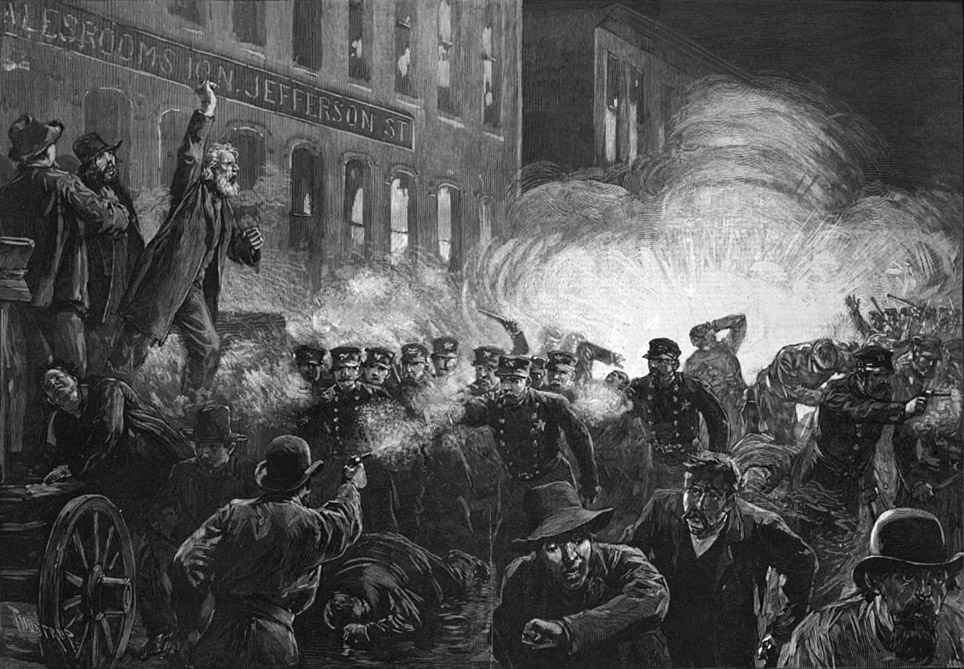
In 1886 and the years leading up to it, unions near and far were calling for an eight-hour work day. On May 1st, 1886, the Federation of Organized Trades and Labour Unions called for a general strike across the US. Two days later, workers from McCormick Reaper Works of the McCormick Harvesting Machine Company in Chicago, Illinois, joined the call to strike but were met with police brutality. The death of several workers prompted a public rally the following day in Haymarket Square. This time, a bomb was thrown and police shots were fired, with casualties on both the worker and police side. The struggle for a shorter work day continued many years following the massacre, with the resolution officially being passed on May 1, 1885 in the US and 1890 in Canada.
The 1919 Winnipeg General Strike
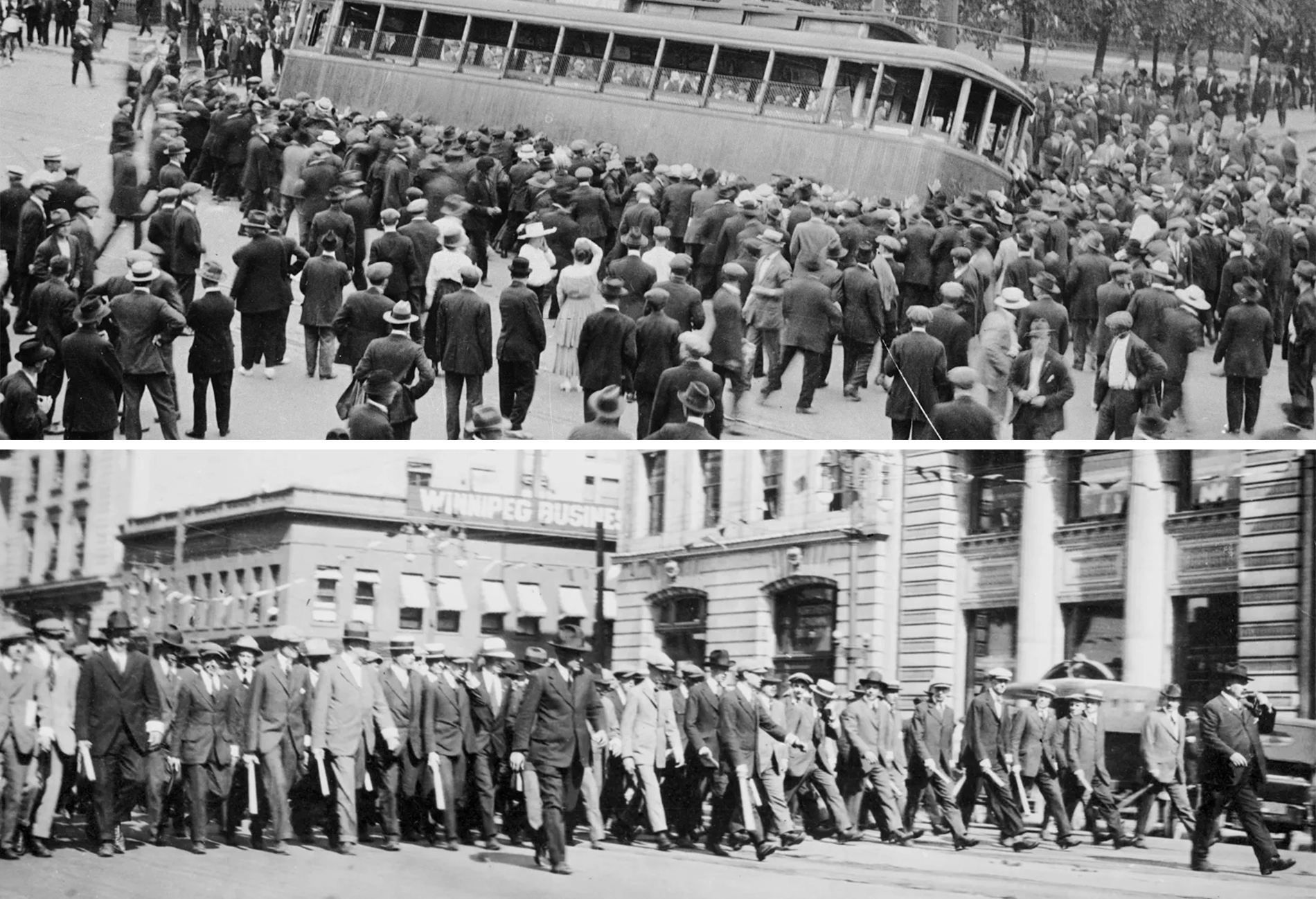
35,000 workers, union and non-union alike, walked off the job on May 15, 1919. The strike was led by the city’s building and metal tradesworkers, calling for better wages and working conditions as the wealth gap grew larger and larger following World War I. A group of workers formed a Strike Committee, and as Travis Tomchuk writes for the Canadian Museum of Human Rights, “Winnipeg was now under worker control.” Some Winnipeg police officers resonated with the mission of the strike, and were subsequently dismissed by the Mayor at the time. In their place, a “Special Police” was recruited, equipped with batons and rifles, as well as the Royal Northwest Mounted Police (RNWMP). Violence inevitably ensued, with many injuries, a few deaths — and a streetcar flipped and set afire during a day known as ‘Bloody Saturday’. To avoid more violence, a deal was made and the strike officially ended on June 26.
The Largest Strike in Canada: The 1972 Common Front
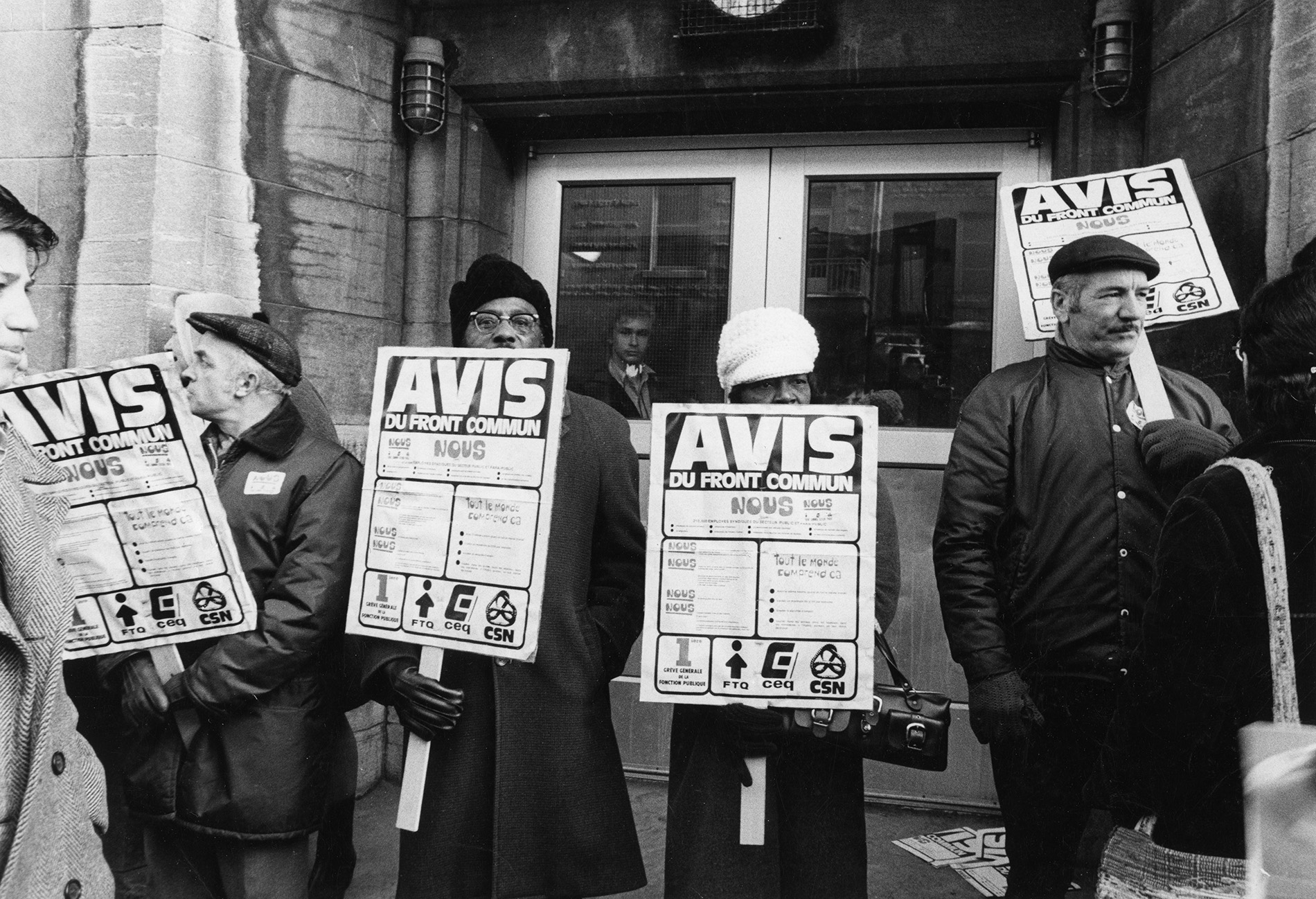
Beginning in April 1972, Canada’s largest strike took place in Quebec and involved over 200,000 workers. It was led by 3 major Québécois unions: the Confederation of National Trade Unions, Québec Federation of Labour, and the Québec Teachers’ Corporation. “We, the ordinary people” was the slogan of the Common Front, established in January 1972. They demanded job security and a $100/week minimum wage to address working class poverty. The strike officially began on April 11 when the government refused to cooperate. Bill 19 was issued in response which prohibited the continuation of the strike. Workers began to return to work. But the situation escalated once again as the government imprisoned three of the prominent strike leaders. The province of Quebec was significantly affected from May 11 to 15 as workers occupied their factories, blocked roads, took over radio channels, and created and disseminated newspapers. In the resulting chaos, the government was forced to reverse the bill, release the imprisoned workers, and meet most of the original workers’ demands.
All of these events took place in and around the month of May, creating monumental change for workers. These movements, along with many others, paved the way for working rights that we now have: weekends, vacation, eight-hour work days, public healthcare, parental leave, anti-harassment in the workplace, the list goes on.
Mayworks and the Arts
By linking the arts to the labour movement, Mayworks reminds us that worker appreciation isn’t just about a long weekend; it’s about a legacy of struggle, creativity, and solidarity that blooms every May.
Sources & Further Reading
canadianlabour.ca/who-we-are/history/
humanrights.ca/story/winnipeg-general-strike
50 Years Later, We Should Still Be Talking About the 1972 Common Front